

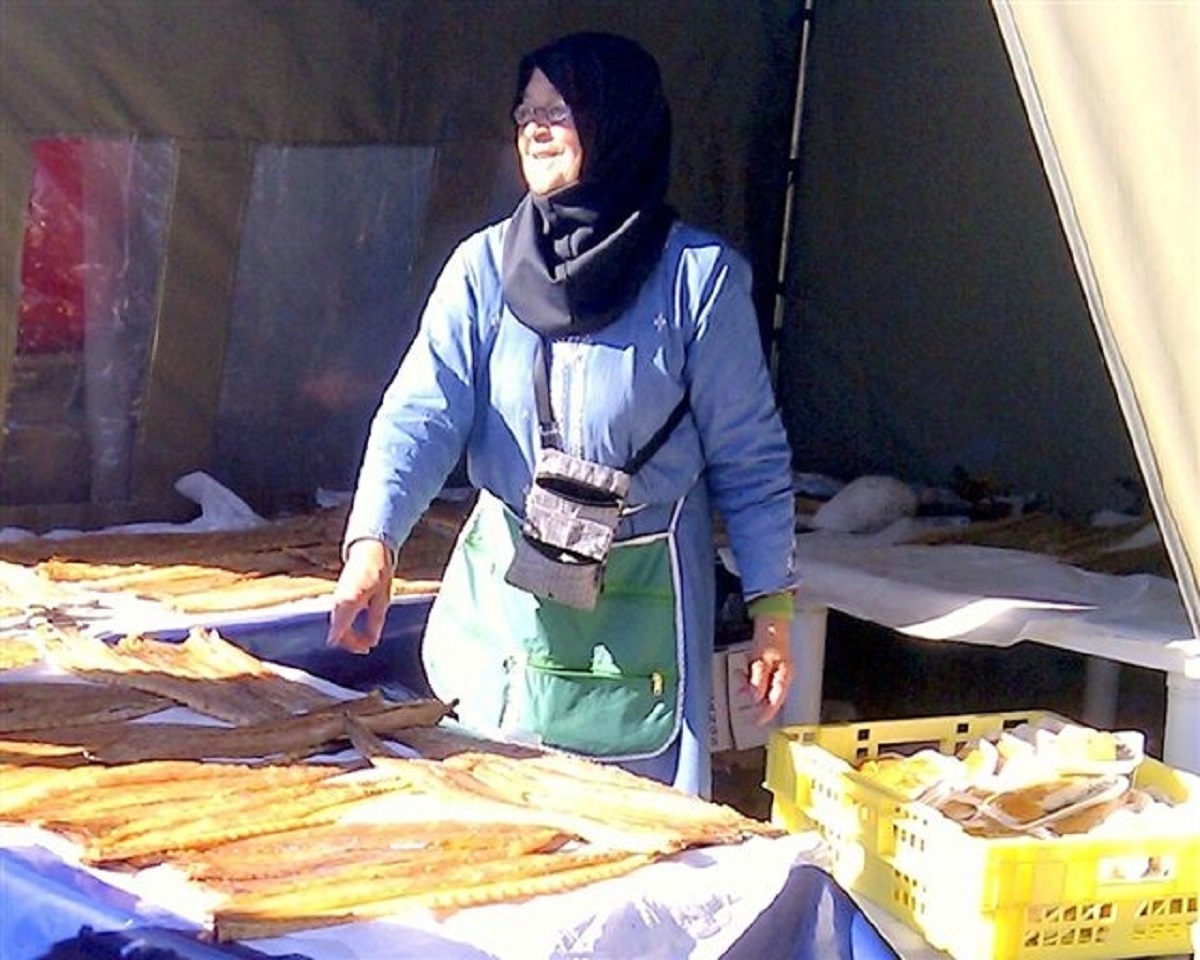
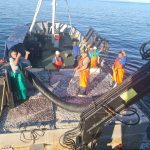
The Cape Snoek is caught by line fishermen who often travel between the western and northern Cape to catch the fish. Cooked mainly on the braai (barbecue), especially at Easter, this favoured fish has wonderful nutritional benefits.
Cape snoek (Thyrsites atun) is a pelagic predator, occurring from northern Angola to Algoa Bay. They are most abundant between the Cunene River and Cape Agulhas along the eastern coast of South Africa. It’s a popular eating fish and the third most available marine fish species in supermarkets throughout South Africa.
It is often eaten smoked or air-dried. It is especially popular among poor and lower-income households who use it to make a stew with onions and potatoes. More affluent households buy it fresh or frozen, often for the purpose of putting it on the fire.
Nutritional value of Cape snoek
Most people know that fish has the nutritional and health benefits of omega-3 polyunsaturated fatty acids (PUFA) such as EPA and DHA. These contribute to the protection against cardiovascular disease, hypertension, cognitive health, cancer, dementia, Alzheimer’s disease, depression and inflammation, amongst other conditions.
The properties of the Cape snoek have been well researched. A few years ago Dr Sune Hattingh of the Department of Food Technology, Cape Peninsula University of Technology, with the help of her students to conduct the research, wrote and published a couple of technical papers.
Her first paper titled “Proximate and fatty acid composition of cooked South African Cape snoek (Thyrsites atun)” examines the protein content of the fish and its nutritional value when it is raw or cooked.
The intention was to make this information available to consumers and processors, for nutritional tables for South African foodstuffs, and for academic databases.
High protein content, low fat
What was found is that Cape snoek is not only very high in protein but is also a very low-fat fish (containing less than 4% fat).
It is also high in omega-3 polunsaturated fatty acids (PUFA) such as ecosapentaenoic acid (EPA), docosahexaenoic acid (DHA) and alpha-linolenic acid (ALA).
In summary, the research confirms that cooking Cape snoek by boiling it at 80 deg. Celcius for one hour, significantly increases the protein content. It also reduces the moisture and ash contents, and has no effect on the total lipid content of skinless muscles.
At the time of writing, there was no comparison of the high protein content of snoek against the profiles of other species such as Cape hake, Cape dory and South African pilchard.
Cooking Cape snoek
Various cooking methods can change the composition of fish and fishery products, and Cape snoek is no exception. For instance, boiling fish prior to drying leads to considerable losses of vitamins and amino acids in the cooking liquid.
The oxidation of fatty acids during heat processing such as boiling, microwave cooking or using the oven, are often related to the cooking time and temperature.
To establish which was the better method of cooking Cape snoek, Dr Hattingh built on existing research. A second paper titled “Effect of Different Cooking Methods on Total Fat and Fatty Acid Composition of Cape Snoek”, examines how the total fat and fatty acid composition of the fish is influenced by cooking it using microwave heat, oven baking and steaming.
Hattingh explained the preparation involved. A sample of 24 gutted, raw, fresh, flecked Cape snoek with an average weight of about 0.28kg, were bought from a local fish supplier in Bellville in the Western Cape.
The fish were randomly assigned to the four treatments. These were:
- raw,
- microwave heat (for 5 minutes at 1200 Watts),
- oven baking (individually tin foil wrapped and baked at 250 deg C for 30 mins),
- steaming (on a tray at 98 deg C for 12 minutes).
Results
To assess the total fat analyses, the fish were brought to room temperature (about 21-22 deg C).
At this point the analyses gets quite technical. For the purpose of this article, the results of the various cooking techniques using domestic appliances are summarised as follows:
- the raw snoek had the lowest (3,88% +-0.73) fat content.
- Oven baking produces a larger increase in total fat compared to cooking in water (6,6% +-0.41 fat content). The reason for this is that the fish muscle absorbed the fat during the baking process. The fish was baked in a baking tray without the fat dripping away.
- Baking however, did not preserve the total PUFA concentration and PUFA/SFA ratio.
The best cooking methods of the three were microwave cooking and steaming.
- Microwave oven energy is more penetrating than heat generated within an oven or through steam.
- Steaming resulted in a significant decrease and loss of total PUFA. It took longer for the food to cook. It was also exposed to heat, light and oxygen for longer.
- There was not much difference between the three cooking methods when it came to changes in EPA, DHA and ALA concentration. However, microwave cooking showed the smallest reduction in EPA, DHA and ALA.
- There was no significant change in the saturated fatty acid (SFA) concentrations between raw fish and any of the samples from the three cooking methods.
The results of the study are similar to those of various other studies that have been completed by other researchers.









Comments are closed.