
Sunfish season is here, and the Two Oceans Aquarium Foundation is calling on the public to play a part in protecting these extraordinary fish. Typically sighted along the South African coast between October and April, each reported sunfish sighting can contribute valuable information about their distribution and seasonal presence, supporting ongoing research and conservation efforts.
Sunfish earned their common name from their “sunbathing” behaviour, lying on their sides at the ocean’s surface as they bask in the sun. The most widespread species, ocean sunfish, are hard to miss. With their huge, flattened bodies and tall dorsal fins, they look unlike any other fish. Among the largest bony fish in the ocean, they can grow up to 2.5 metres long and weigh as much as 2000 kilograms.
“These extraordinary fish travel great distances in the open ocean, so observations from coastal waters and harbours can add useful local detail to the wider picture of their movements,” said Calley Chateau-Cyster, Head of Pathways and Research.
The Two Oceans Aquarium Foundation has long supported international efforts to better understand and protect sunfish through hands-on rescues, scientific research, and citizen science. By collecting biological samples, recording sightings, and collaborating with researchers, the Foundation is helping to build a clearer picture of sunfish species diversity, distribution, and the threats these fish face.
A core part of this work is carried out by the Foundation’s Marine Wildlife Management Programme (MWMP), which monitors the marine wildlife within the V&A Waterfront precinct, including sunfish. During the summer months, sunfish are regularly sighted in and around the V&A Waterfront harbour. While some move through the area without difficulty, others may become trapped or experience difficulty navigating out of enclosed harbour spaces. When assistance is needed the Marine Wildlife steps in to guide the sunfish safely back into open waters.
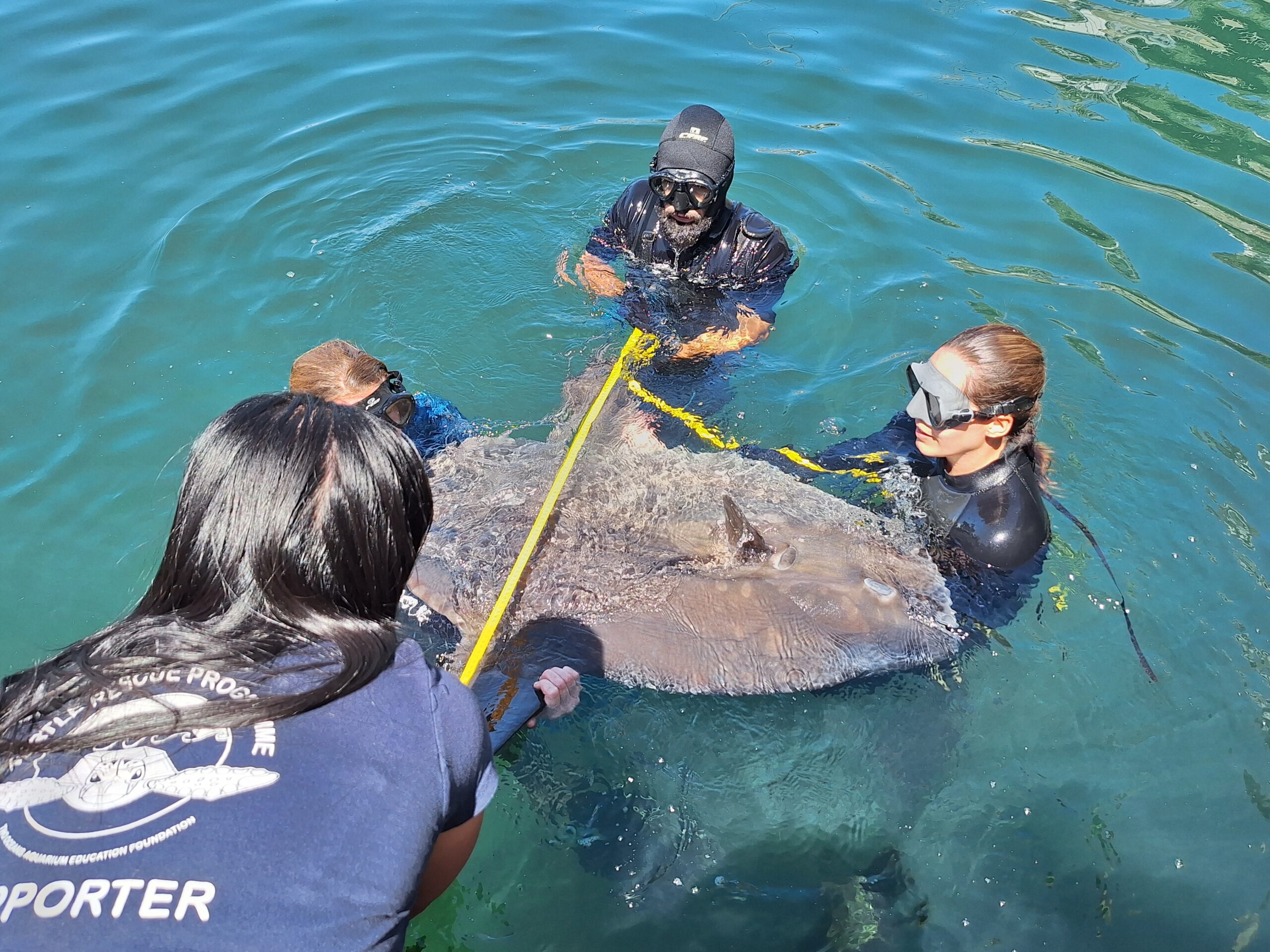
These rescues present valuable opportunities for scientific research. Working closely with the Foundation’s Research team, the Marine Wildlife team records measurements and, where possible, small tissue, and parasite samples that contribute to local and international studies of sunfish.
“Members of the public play such a valuable role in our work, as many of the sunfish we assist are first brought to our attention through their sightings. These reports allow our team to assess the situation and determine whether the sunfish requires assistance. Where intervention is necessary, we work to safely guide the sunfish out of the harbour and back into the open ocean,” said Marine Wildlife Manager, Martine Viljoen.
You do not need to be a scientist to contribute to sunfish conservation. This is citizen science in action: Ordinary people contributing valuable observations that help researchers better understand and protect marine life. Whether you’re a fisher, boater, diver, or beachgoer, reporting a sunfish sighting to the Two Oceans Aquarium Foundation is a simple but meaningful way to get involved in ocean conservation.
Sunfish face many threats, including accidental capture in fishing gear, plastic pollution, and damage to their ocean habitats. Every sighting reported to the Foundation adds another piece to the puzzle, such as helping researchers build a clearer picture of where and when these extraordinary ocean wanderers occur along our coastline, contributing valuable information towards their research and conservation.
Have you spotted a sunfish? The Two Oceans Aquarium Foundation wants to hear about it. Send the date, location (GPS coordinates if available), and a photo or video to 076 092 8573 (WhatsApp) or sightings@aquariumfoundation.org.za (email). If a sunfish appears trapped or distressed, please report it immediately so the team can assess the situation.
Read: Massive Sunfish Rescue a New Year First
Image supplied: On receiving reports of a sighting, a trained team of expert researchers collect data such as measurements. Each reported sunfish sighting can contribute valuable information about their distribution and seasonal presence, supporting ongoing research and conservation efforts.