
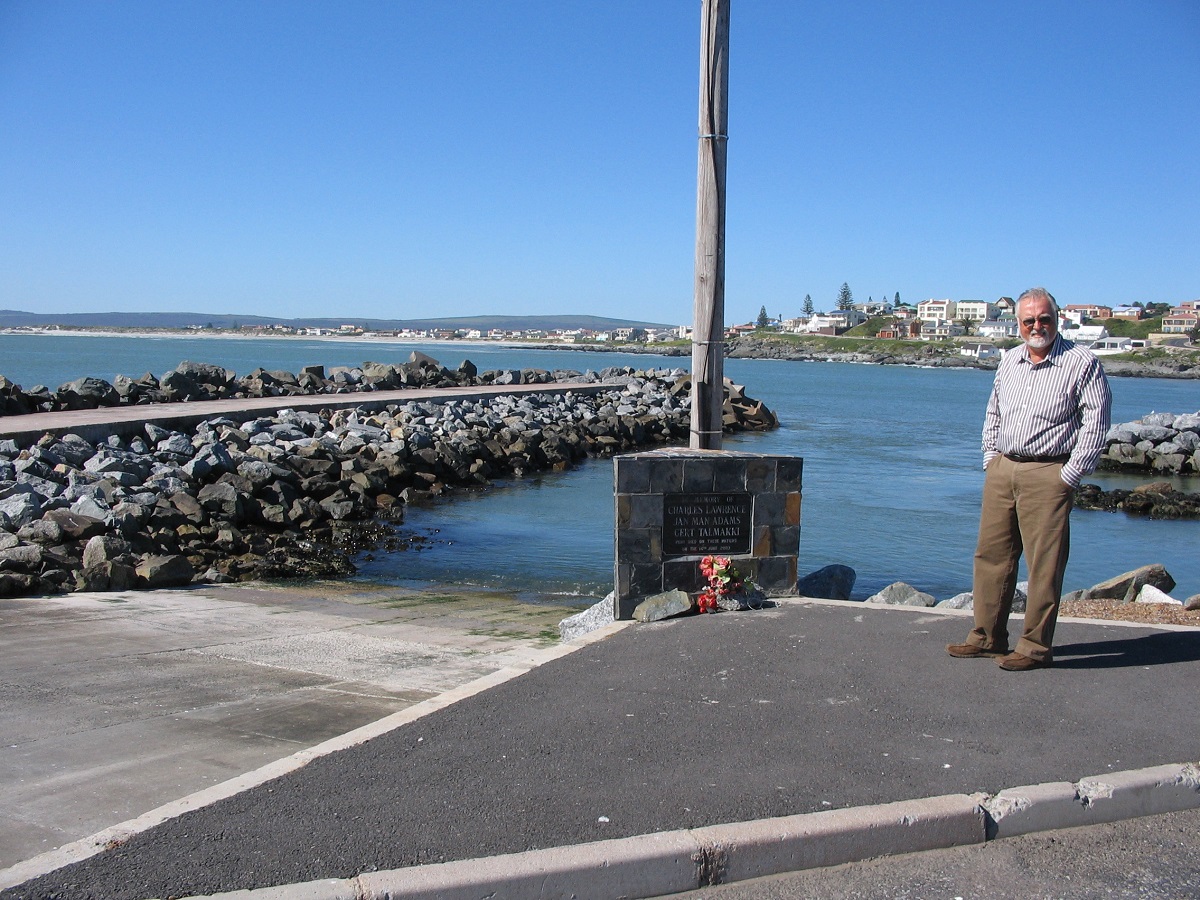
The sad news that Wally Croome, chairman of the South African Commercial Linefish Association (SACLA) has passed away, will be a blow to traditional linefishers in the Western Cape, and the fishing industry at large.
Croome, a boat owner, skipper and right holder, spent a large part of his life looking out for the interests of fellow line fishermen. Intensely interested in making sure the right message made it to the right ears, he decided in the early 2000s he would represent his sector.
FRAP 2005
This was very evident during the 2005 long term right allocation process when given the state of the commercial traditional linefishery, only 450 suitable applicants could be granted rights. To cater to policy change and revised criterion which ruled out a lot of traditional line fishermen, the Minister decided that a new commercial small-scale fishing sector should be created. The idea was that it would accommodate bona fide traditional fishers who had not been successful in the application process.
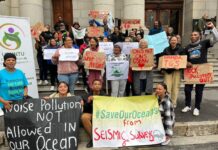
This did not sit well with thousands of small-scale fishers along the coastline who took to the streets of Cape Town, marching on Parliament to deliver memorandums of demand and signed petitions. Croome understood fully why they were upset with the status quo. The same message continues to apply: “it is impossible for every person who has applied for a right to be allocated a quota.”
Fix the problem by addressing the problem
The Western Cape Linefish Association as it was then still called, was also not happy. Of the provisional list of 381 names, 105 had been placed on a reserve list, his included. This was because of comments received by Marine and Coastal Management (MCM), many of which it transpired were subjective and inaccurate.
But instead of seeing poaching as the solution, his response was it “was better to fix a problem by addressing a problem.” He approached the Rights Verification Unit which agreed to interview everyone that had been placed on reserve.
And although the affected fishermen lost out on a good weather window that year (which also happened to be one of the poorest snoek seasons the Western Cape had ever had), they were winners when 93 of the 100 members of the Association were allocated long term rights.
Keeping the conversation flowing
Croome’s powers of persuasion enabled him to continue playing an active role in representing line fishers in discussions. Since those early days with the (then) Minister (Marthinus van Schalkwyk) and Deputy Director General (Dr Monde Mayekiso) leading MCM, he continued to voice his sector’s concerns in various meetings with the many newcomers that have occupied these roles.
It was interesting times that included discussions about the Marine Living Resources Act of 1998 (MLRA), the decline in main linefish marine resources (specifically abalone, hake and west coast rock lobster), and the dwindling total allowable catch (TAC).
When there was agreement to establish the first formal liaison industry body with MCM, Croome made sure he was on the committee.
Other assistance
Although from time to time Croome was frustrated with the slow pace of decision making, he never lost interest in helping his fellow fisherman. He is known for giving sound advice on which boat and choice of engine is the best value for money.
He also resolved the VMS (Vessel Monitoring Service) issue when in 2007 all boats had to be fitted to comply with legislation. Canvassing the market, he negotiated a cheaper (R4500) price for the product. Despite this some fishers didn’t want to pay this amount which resulted in a delay over VMS compliance.
Croome’s point was “if the commercial fishers can stretch their budgets to comply with the authorities, then so can the individual fishers (the price had by then increased to R8000). All we want is fairness. You either want us all switched on, or all switched off.”
Snoek and Yellowtail imports
Snoek was also a favourite subject of Croome’s, and he helped facilitate a lot of research and analysis about the species, the instability of the traditional linefishery and the lack of a co-management structure, and its value chain.
With the linefishery already in a state of emergency by 2008, most upsetting to him over the years were the imports of yellowtail from the Far East and “snoek” (barracouta) from New Zealand which were flooding the local retail market.
There was no accurate record quantities being imported and by 2013, he was forced to concede “the linefish sector is bleeding, absolutely bleeding, at the moment.” Worse still, when catches were quite good, the fishermen were forced to drop their prices to attract sales, putting a further squeeze on already compromised livelihoods.
Again, looking for a solution, he approached conservation group WWF-SA and its SASSI (Southern African Sustainable Seafood Initiative) which committed to investigating the matter.
Setting aside the 2013 fishing rights allocation process
In 2014, Croome was successful in getting (another former) Minister, Tina Joemat-Pettersson, to agree a binding court order with the SA Commercial Linefish Association which had applied to have the fisheries department’s right allocation process set aside. This followed the granting of an interim order to allow line fishermen to continue fishing after they had lost their traditional rights.
The review of the controversial 2013 fishing right allocations was due to be brought before the Western Cape High Court in April 2014. When the State attorney asked for an extension of time to mid June, Mike Strydom Attorneys acting for the Association, said: “they wanted us to hold fire until the departmental audit into FRAP13 (announced by Minister Tina Joemat-Pettersson) is completed.”
This was the first inkling that the Minister was intending “to set aside the entire FRAP 2013 process, including all decisions and outcomes”, and by June the announcement had been made.
A month later, yet another new Minister and Deputy of (then) Agriculture, Forestry and Fisheries, Senzeni Zokwana and Bheke Cele, appeared at a committee session of the new parliamentary portfolio committee for fisheries.
Commenting, Peter Edwards in his legal column (Fishing Industry News SA June 2014 issue), said: “The recent decision by the Minister to set aside all decisions, quota allocations for the 2013 FRAPS process based on her legal audit and expert legal opinion is welcomed.
“Besides generating some confidence that administrative justice will prevail and that a new delegated authority will make more rational decisions on awards, the effects of which would be to suggest that poor management by the fisheries branch cannot continue infinitum without great cost to the industry.
“The eight sectors allocated via the 2013 FRAP process indeed experienced a torrid time of having to deal with poorly crafted sectoral policies, illogical decisions and poor communication generally by the affected sectors. It is comforting and with sense of relief now that eight sectors will be re allocated.”
Current times
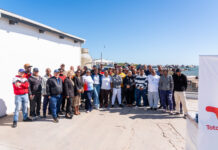
Croome who lived in Yzerfontein since 1988, probably saw the best of the fishing industry and continued to give back to it, hosting various meetings at the Oceana Power Boat Club, and fighting for the rights of fishermen during the COVID-19 pandemic.
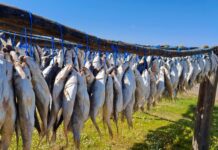
But even he did not have the answers to the vanishing snoek. About 15 years ago, about 60% of the national snoek run was caught off Yzerfontein, and chaos reigned in his town as up to 120 snoek boats and accompanying crew jostled for space. But since then catches have dwindled to next to nothing and various schools of thought point to, amongst other reasons, the eastward migration of the sardines, climate change, and of course seismic surveys.
In the past week the snoek has been running in Lamberts Bay. No doubt, if he could be there, he would have been.