
Recent storm activity along the Cape Peninsula coastline is expected to result in an increase in stranded sea turtle hatchlings over the coming weeks. The Two Oceans Aquarium Foundation’s Turtle Conservation Centre is calling on the public to remain vigilant when walking along the coastline and to look out for tiny turtles washed up on beaches, as this will greatly assist ongoing rescue efforts.
“Each year, from late February through to winter, hundreds of endangered turtle hatchlings wash ashore along the Western Cape coastline during what is known as ‘stranding season’. With rough seas and strong winds currently affecting the region, an even greater number of strandings is anticipated,” says Turtle Rescue Network Coordinator, Tracy Whitehead.
These tiny loggerhead and leatherback turtles hatch along the northern KwaZulu-Natal coastline between October and December before entering the powerful Agulhas Current. As the current slows and turns near the Cape, many hatchlings are pushed into colder waters associated with the Benguela Current. Unable to survive these icy, rough conditions, the turtles become cold-stunned, dehydrated, and exhausted, eventually washing ashore.
What to do if you find a stranded turtle
Members of the public are urged to act quickly and carefully if they encounter a stranded turtle:
Do not return the turtle to the ocean. A stranded turtle is likely injured or compromised and will not survive if put back into the water.
Call the Turtle Rescue Hotline immediately: 083 300 1663.
Keep the turtle safe and sheltered. Place it on a dry towel in a ventilated box, out of direct sun and wind.
Stay with the turtle until assistance arrives or further instructions are provided.
For more information on the Turtle Rescue Network click on this link: https://www.aquarium.co.za/foundation/conservation/turtle-rescue-network
The Two Oceans Aquarium Foundation’s Turtle Conservation Centre prepares each year to coordinate rescue efforts and rehabilitate these vulnerable animals. However, successful rescues depend heavily on public support.
The Turtle Rescue Network, a collaborative network of more than 2 000 volunteers and organisations, plays a vital role in responding to strandings along the coastline, from Lambert’s Bay to Gqeberha.
When a stranded turtle is reported, the network is activated to ensure the animal is safely transported to the Turtle Conservation Centre for care. The Foundation works closely with partners, including the Department of Forestry, Fisheries and the Environment (DFFE), the National Sea Rescue Institute (NSRI), SANParks, and CapeNature, to coordinate these rescue efforts.
“Stranded hatchlings are often small, camouflaged by sand, algae, or barnacles, and are typically found along the high-tide line, making them easy to miss,” warns Whitehead.
Once at the Turtle Conservation Centre, hatchlings receive medical care, rehydration, and ongoing monitoring. Many suffer from hypothermia, injuries, or plastic ingestion – a major threat to young turtles that mistake floating plastic for food. With proper care, these turtles can recover and are released back into the ocean when conditions are favourable.
Residents and beachgoers along the Cape Peninsula and broader Western Cape coastline are encouraged to stay alert during this period of increased risk.
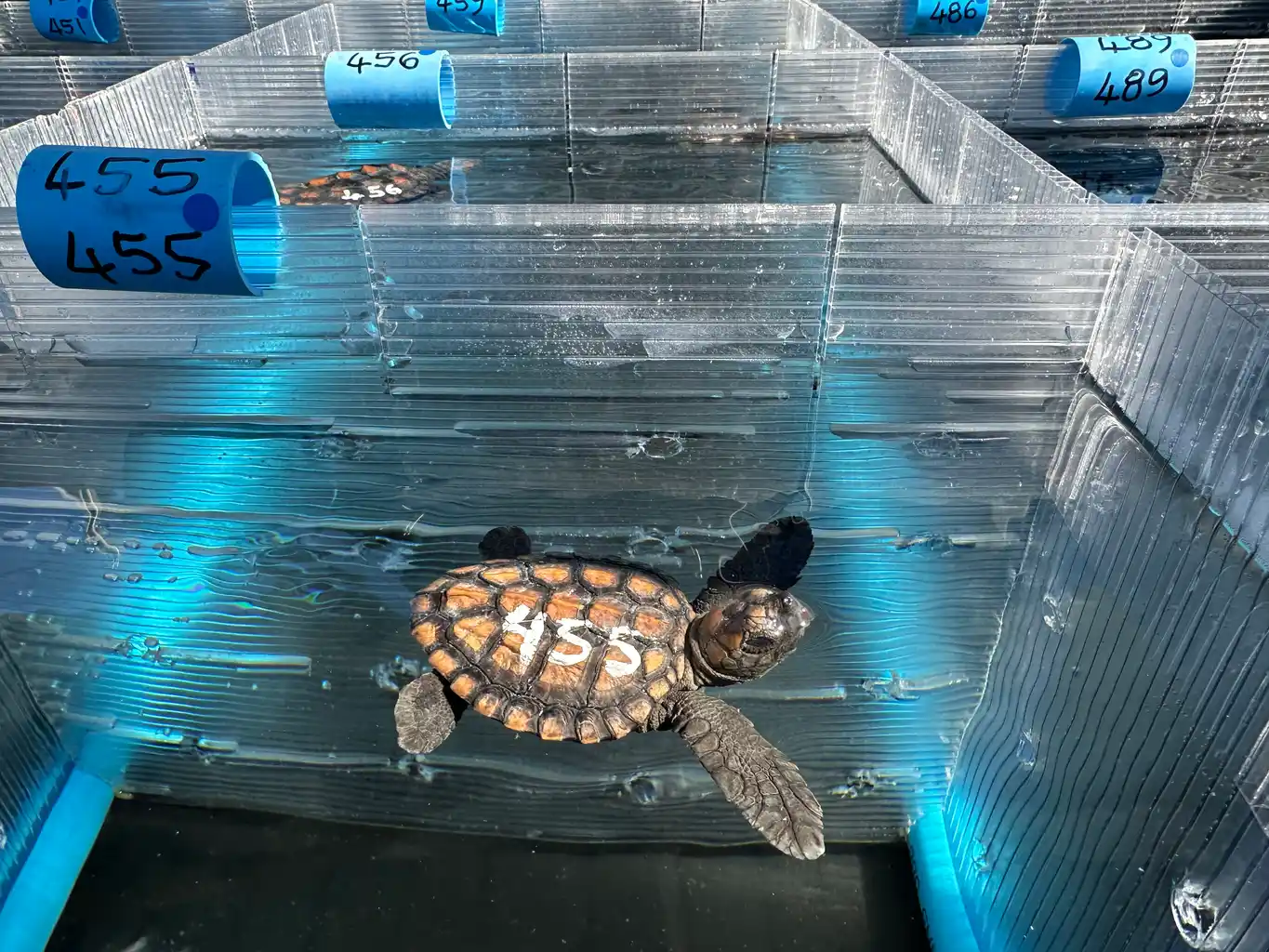
Caption: A loggerhead turtle hatchling during rehabilitation at the Turtle Conservation Centre at the Two Oceans Aquarium. Image Supplied.